March 15, 2022
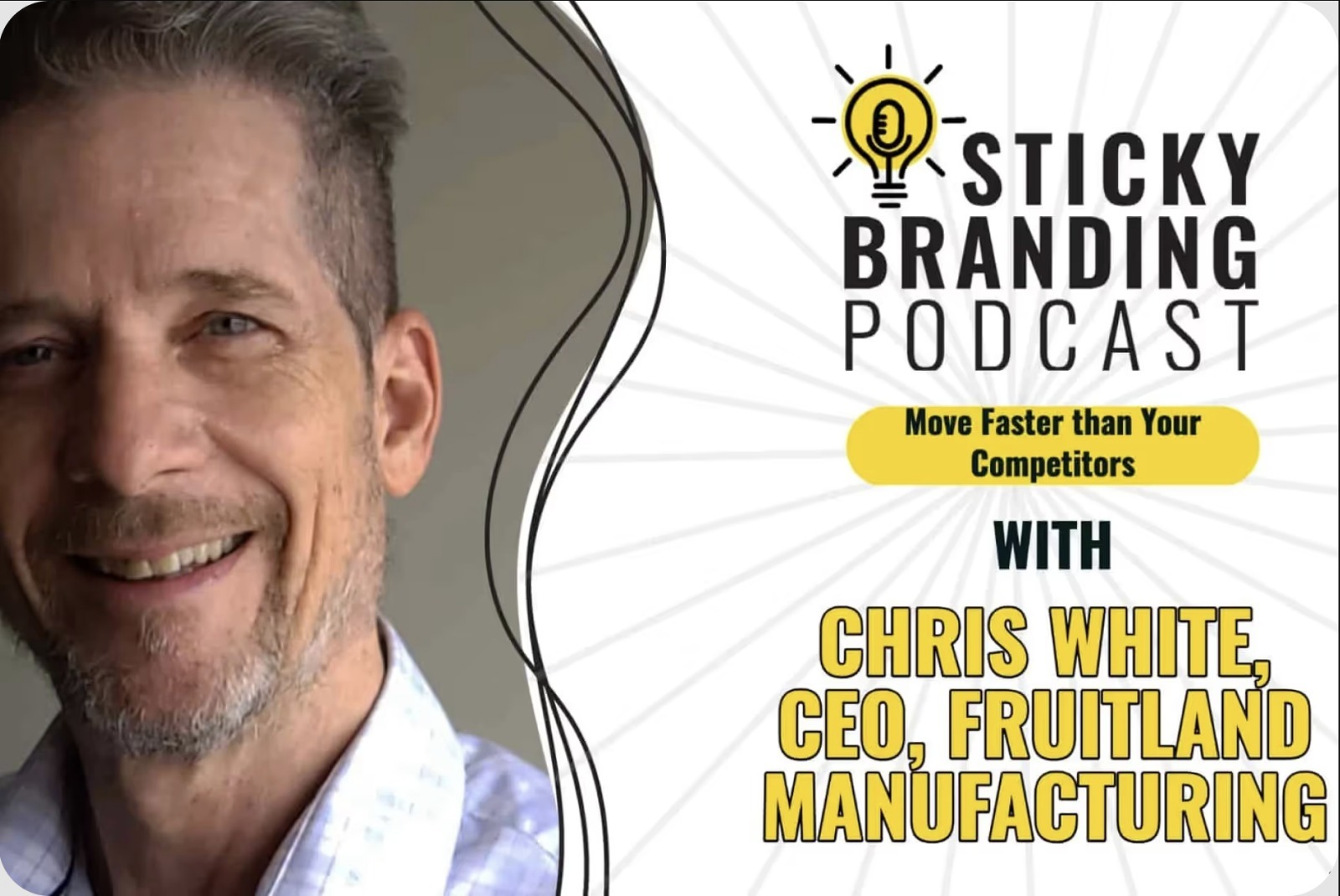
Move Faster than Your Competitors
-p-500.avif)
Podcasts
In this episode
- 10 weeks before the pandemic struck, Chris White and his partner acquired Fruitland Manufacturing. In a matter of days, everything changed.
- How Chris and his team moved fast and responded to customer demands, and captured market share.
- While competitors cut their sales and marketing budgets, Fruitland expanded theirs. They repositioned their brand as “One Tough Pump.”
- Strong leaders focus on their people. Chris spoke the truth about what they knew and didn’t know, and communicated constantly with his employees.
Background
Chris White is the CEO of Fruitland Manufacturing. Chris joined the company in 2014 as President and acquired the company in 2019. Under his leadership, Fruitland has grown into the global leader of mobile vacuum pumps with the brand, “One Tough Pump.”
Interview with Chris White, CEO of Fruitland Manufacturing
The companies that act fast and adapt faster have the advantage. Chris White, CEO of Fruitland Manufacturing, comes on the Sticky Branding Podcast. He shares how his company captured market share by moving faster than the competition. When the rest of the industry retreated and cut costs at the start of the pandemic, Chris increased Fruitland’s sales and marketing budget. This was a bold move, because Chris had only purchased the company just 10 weeks earlier. Tune into this story of grit, innovation, leadership, and transitioning from a crisis to a comeback.
Transcript
- Welcome to the Sticky Branding podcast. In this show, we are unpacking how companies grow sticky brands. My name is Jeremy Miller, I am the Founder of Sticky Branding and host of this show. And in today’s episode, I’m very excited to introduce you to a client, a friend, a serial entrepreneur, and the CEO of Fruitland Manufacturing, Chris White. Chris, welcome to the show.
- Thank you, Jeremy, pleasure to be here.
- So rather than giving your intro and stealing your thunder. I always like just to reverse this. Tell me about Fruitland, who are you guys and what do you do?
- Yeah, well, Fruitland Manufacturing has been around for a long time, longer than I’ve been alive. And we are a provider of mobile vacuum solutions. And what I mean by that are vacuum type solutions for tanker trucks that you’d use for water haulers, for environmental cleanup trucks, septic trucks, that kind of thing, so that’s our specialty. We started out as a machine shop tool and dye maker many years ago and were asked to build a vacuum pump at one time about 40 some odd years ago, which we did. And then we sort of developed our own vacuum pump and branded it and the rest is history.
- That’s incredible, I’m curious that being the business has been around so long. How did you get involved with Fruitland?
- I was in the material handling business for many years, and family business, and we sold that and I continued to work with the company and reported to our president in the United States. And that worked out well for about six years. Then it was time for me to move on. So long story short, I looked for something different. I wanted to see if, when you’re in a family business, you often think, well, if I didn’t have this opportunity being a family member, would I actually be any good? Would I actually be able to make anything happen? So I wanted to step out and be in a completely different business in a different industry, and just see if I could still make things work. If the principles and beliefs and philosophies, that I espoused were actually worth something.
- So I’ve been here for 10 years now and I approached… We were put in touch by a mutual accountant that we were using and I was looking for an opportunity. And the former owner was looking for someone to help him run the company. And I said, well, I’d like to come in and be part of it, but I don’t just want a job, I wanna be part of it. And he said, well, why don’t you work with me for a year, and then after the year, if we still like each other we’ll see about doing a deal. So we did and long story short again, here we are 10 years later, and now I own the business so.
- That’s incredible and you acquired the business at the end of 2019, I guess it’s 60 days roughly before the start of the pandemic.
- Yeah.
- Before the start of the pandemic.
- Yes, that was interesting. So I have a business partner, Dawn and she’s our CFO. And we’ll talk more a little bit about that, and how that’s worked so well for us. But yeah, that was a tough one, all your forecasting that you do, and we all do on a regular basis. You just can’t anticipate what’s going to happen. You don’t know.
- So COVID was one of those things that the whole world had to face and, we had to face a whole new forecast. So how do you budget for something like that? We don’t know what’s gonna happen. You don’t know what your customers are gonna do. You don’t know what your dealers are gonna do, how they’re gonna react, what effects that they’re gonna have to deal with.
- So, yeah, it was tough, but it’s funny. We got into it, and so as soon as it happened, we started to daily and weekly monitor what was going on, what regulations were in place that we had to follow, what things we had to consider just on the fly. It was just you’d get up and you’d go to work and you think, okay, what are we dealing with today? We just didn’t know.
- And my colleagues in other businesses were all the same way. So we figured it out, we did a budget, we did a forecast, and she was, you know, we actually came very close to our forecast at the end of 2020. It wasn’t great, it wasn’t what we had originally hoped, but it was pretty much on the target.
- So, I guess you have to try and forecast, and budget as best you can and we were able to do that. So we managed well, we kept all our employees. We used the assistances that were available, the government assistance that was available. That helped a lot. And we made it through the end of the year and it was okay. It wasn’t great, but we survived.
- And I think we’ve all gone through those… It was a once in a lifetime, hopefully once in a lifetime event. And to be able to get through that I think is an accomplishment, many companies have not, and there has been those challenges. But when you go back to when this all started, what were you telling yourself and your team to keep them focused on what was important? How did you raise everyone up to help navigate them through this moment in time?
- Great question because, again, we were inventing on the fly, and because we didn’t have a playbook for this. So the best thing, and I would still maintain this in any crisis is communicate. So what do you know, don’t keep it a secret communicate as best you can.
- And that’s what we did. So we were honest with our employees, we implemented programs, we had work share, we had to cut some hours back, but as I said, we maintained all our employees. And I gotta say our staff, everybody was very accepting of everything that happened and we did and we pulled through.
- So in one word, I would just have to say communicate. And that isn’t just through sending emails out and letters out, but I would make sure that every day we do the same thing. I go to the floor, I spend time talking with each employee every day. Even if it’s just a hi, how are you doing? But it’s important to make sure. And if they have questions they can just ask, and some will ask very poignant questions. Like what’s going on and what are we gonna do about this?
- And you say, well, I don’t really know right now, but we’re working on it and we’re aware of it. Or, yeah, I do know and here’s what we’re doing about it.
- When you say you don’t know, does that create trust? Does that create uncertainty? How did your team respond to, honestly didn’t know, but when you say that that kinda goes counterintuitive to say the patriarchal management style that at least I grew up in a family business then that’s how my dad would run it. But like, how did you find that people responded to that?
- Saying, I don’t know, but saying, when I do know I’ll let you know is being honest, it’s being human. It’s saying, we just don’t. As I said before we don’t have a playbook for this. So I don’t know.
- And when you come up with an answer that is sort of a fabricated answer, that may not be based on nothing. People know that, I mean, they can sense when you’ve just fabricated something. So the best policy is just be honest. You know what, I don’t know, Jeremy.
- I think it’s brilliant. I think it’s so important for us to say that ’cause that’s part of the challenge of leadership is being able to say, this is what I know today. This is what I don’t know. And this is the choices that we’re making to go forward and giving people an opportunity to come along for that ride.
- Right.
- What are you most proud of when you look back at what your team accomplished through this just incredible moment in time? What are you most proud of from what they’ve accomplished?
- Oh, boy, there’s so many things. I’m really impressed with the people. And I’m gonna say that’s most of our employees in this company, I’m gonna say all of them to some degree, but some really stepped up.
- And so what I mean is that, some people recognize that it’s difficult. We all recognize is difficult, but you know, those who really dug in and really took the time, and you can tell they’re focused on what they’re doing, and they’re looking for opportunities, they’re looking for ways to make things better. They’re communicating and they’re saying, here we gotta think about this, or we have to think about that.
- And bringing it to you and saying, what can we do about this? And, that’s the thing I think I was most taken with was how many people in the face of adversity stepped up and actually took control and made a difference.
- And it was that culture that allowed us to get through this whole thing and it’s somehow made us stronger. Like, I think we’re more of a cohesive group than we were before. That’s a good question, I’ll have to ask around, and see if other people feel the same way. But I believe they do.
- Did that culture exist? Was that part of what Fruitland was before the pandemic, and it just was amplified?
- Yeah, good question. Fruitland, of course, that culture that was here was here long before I was here. So yeah, I mean, a lot of people have retired and moved on. And we don’t have a very high turnover rate here at Fruitland. So the culture is very strong.
- But, we don’t maintain the culture just to maintain the culture. I’m open to change and new ideas. And if that has to shift culturally a little bit, then that’s okay if it’s better for the employees, better for the company as a whole. But yeah, no, we mustered through that pretty well.
Related Articles


subscribe
to our

.png)
newsletter
Get weekly email with ideas, stories, and best practices to grow a Sticky Brand!

Let's Chat
A Sticky Brand is the fastest and most effective way to grow your business. When your clients know your brand, like it, and trust it — they will choose you first! We’ll show you how!